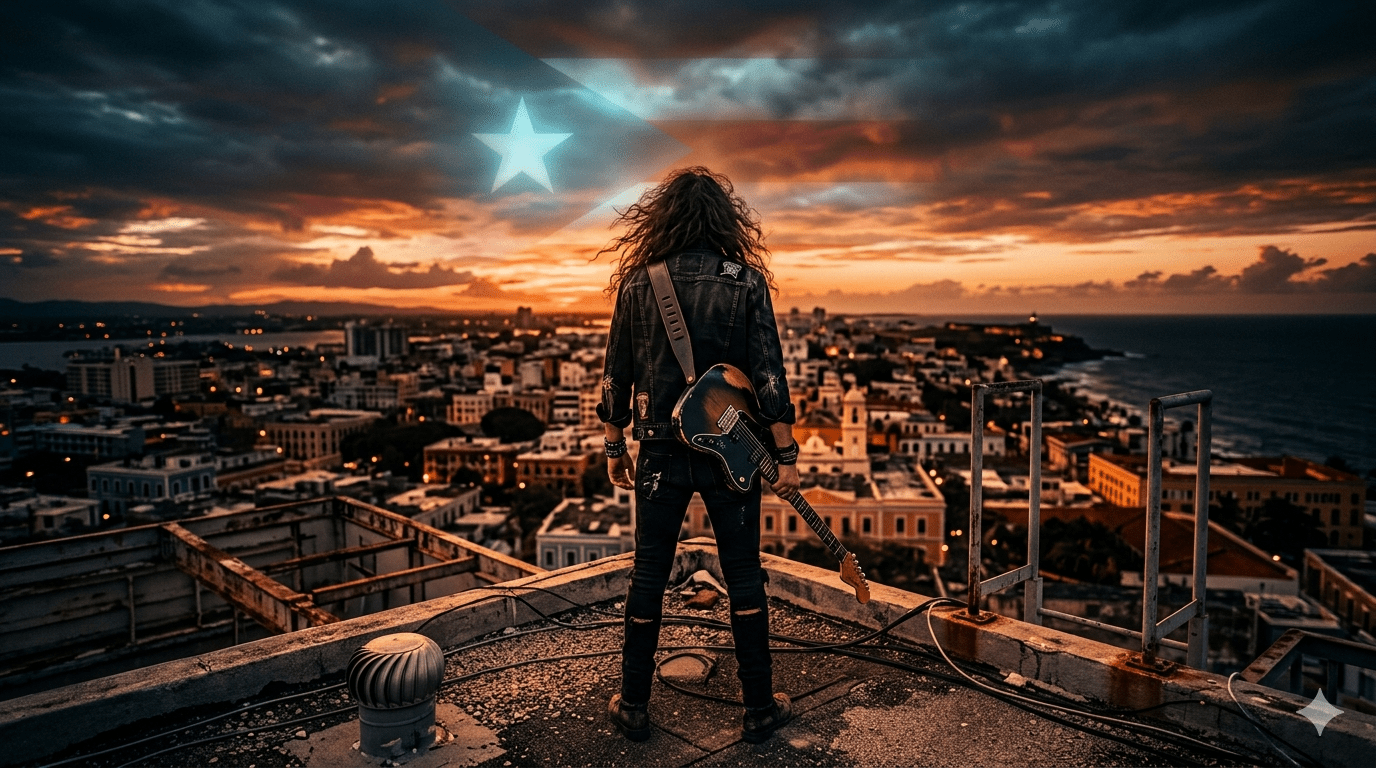
Puerto Rican metal is more than a regional variation of heavy music — it’s a reflection of identity, resistance, and evolution.
While Puerto Rico is globally recognized for genres like salsa and reggaeton, the island has a deep and often overlooked connection to metal. Over the years, a distinct sound has emerged — one shaped by cultural roots, diaspora experiences, and a constant push to redefine what metal can be.
This is where Puerto Rican metal begins.
The Origins of Metal in Puerto Rico
Metal in Puerto Rico began gaining traction in the late 1980s and 1990s, influenced heavily by the global rise of thrash, death metal, and extreme subgenres.
Local bands started forming underground scenes, performing in small venues and building a loyal following. Despite limited industry support, these bands created a foundation that would define Puerto Rican metal for decades.
Groups like Puya helped push boundaries by blending heavy riffs with Latin elements, proving that metal from Puerto Rico didn’t have to follow a traditional formula.
This early era established something important: Puerto Rican metal would not just imitate — it would evolve.
What Defines Puerto Rican Metal?
Puerto Rican metal is not defined by a single sound. Instead, it’s shaped by a combination of influences that reflect both the island and its people.
Key characteristics include:
• Heavy foundations rooted in death metal, thrash, and hardcore
• Rhythmic influence drawn from Caribbean and Latin traditions
• Bilingual or Spanish-driven lyrics
• Themes of identity, struggle, history, and cultural pride
Bands like Dantesco and Zafakon represent different ends of the spectrum, showing how diverse the scene truly is.
There is no single formula — and that’s exactly the point.
The Role of the Puerto Rican Diaspora
Puerto Rican metal doesn’t exist only on the island.
It lives in New York, Florida, California, and anywhere Puerto Rican communities have settled. The diaspora has played a major role in shaping the sound, bringing together different influences and experiences.
For many artists, metal becomes a way to process displacement — being caught between cultures, languages, and identities.
This creates a unique tension in the music: not fully one thing, not fully the other.
That tension becomes fuel.
It’s what gives Puerto Rican metal its emotional weight and authenticity.
A Sound Still Evolving
Unlike more established regional scenes, Puerto Rican metal is still being defined in real time.
New artists continue to experiment, blending genres, incorporating unexpected influences, and pushing beyond traditional boundaries.
This evolution is not accidental — it reflects a generation that is no longer interested in fitting into predefined categories.
Puerto Rican metal is not static.
It adapts.
It expands.
It reinvents itself.
Where MetalRican Fits In
MetalRican is part of this new wave of evolution.
Rather than staying within the limits of traditional metal, the project explores what happens when Puerto Rican identity is placed at the center of the sound — not as an influence, but as a foundation.
MetalRican blends heavy music with rhythm, culture, and storytelling shaped by both the island and the diaspora.
It also introduces a new layer to the genre: the use of AI as a creative tool.
Not as a replacement.
As an amplifier.
In doing so, MetalRican pushes Puerto Rican metal into new territory — one that reflects both where it comes from and where it’s going.
Conclusion
Puerto Rican metal is not a trend.
It’s a growing identity within heavy music — one built from history, shaped by movement, and driven by people who refuse to be confined.
It doesn’t ask for recognition.
It builds its own.
And it’s only getting started.
Leave a Reply
You must be logged in to post a comment.